Solvy.
Your personal guide to real-life math
Productions:
2015, Solvy
Type:
SaaS, Mobile App, Website
Role:
Art-direction, Product Design, UX/UI
Link:
solvy.com [archive]
The design of a math guide in real life. It helps users discover the possibilities of mathematics as a tool for solving real-world problems. The web service, mobile application, and website were designed.
The project was originally intended for high school students and for their assessment by teachers. He was tested in several secondary schools in California, USA.
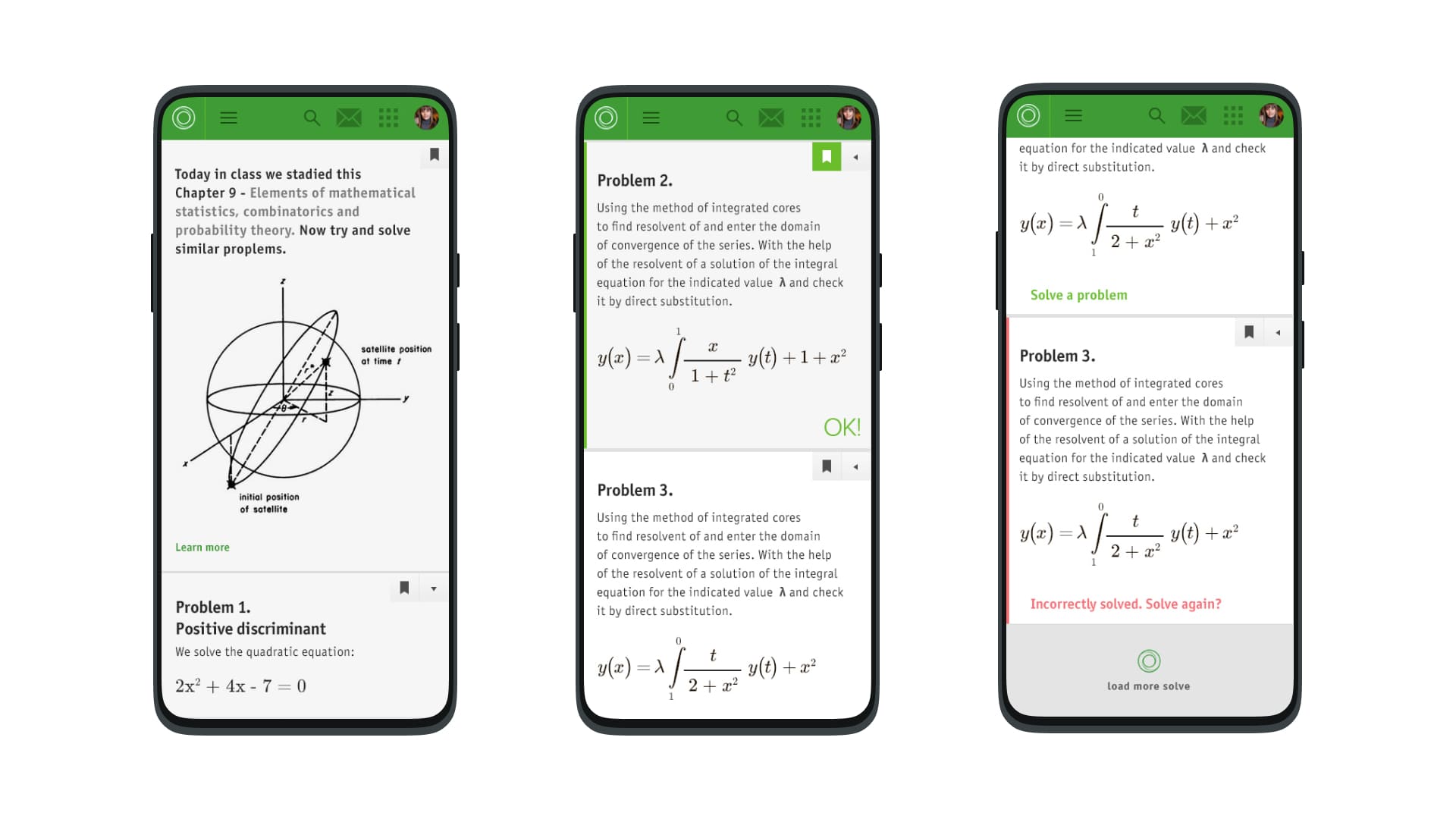
Mobile app. List and task statuses
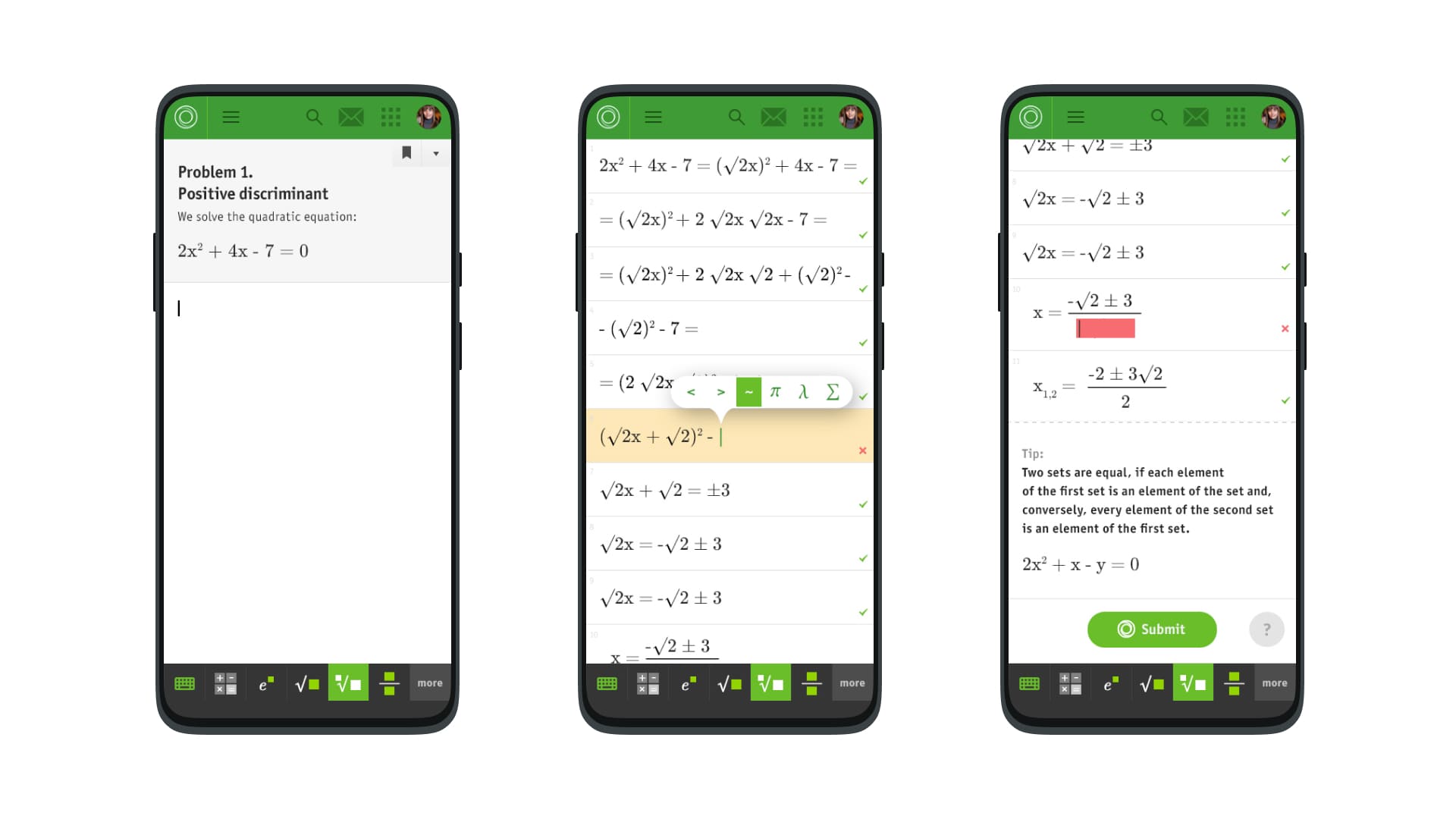
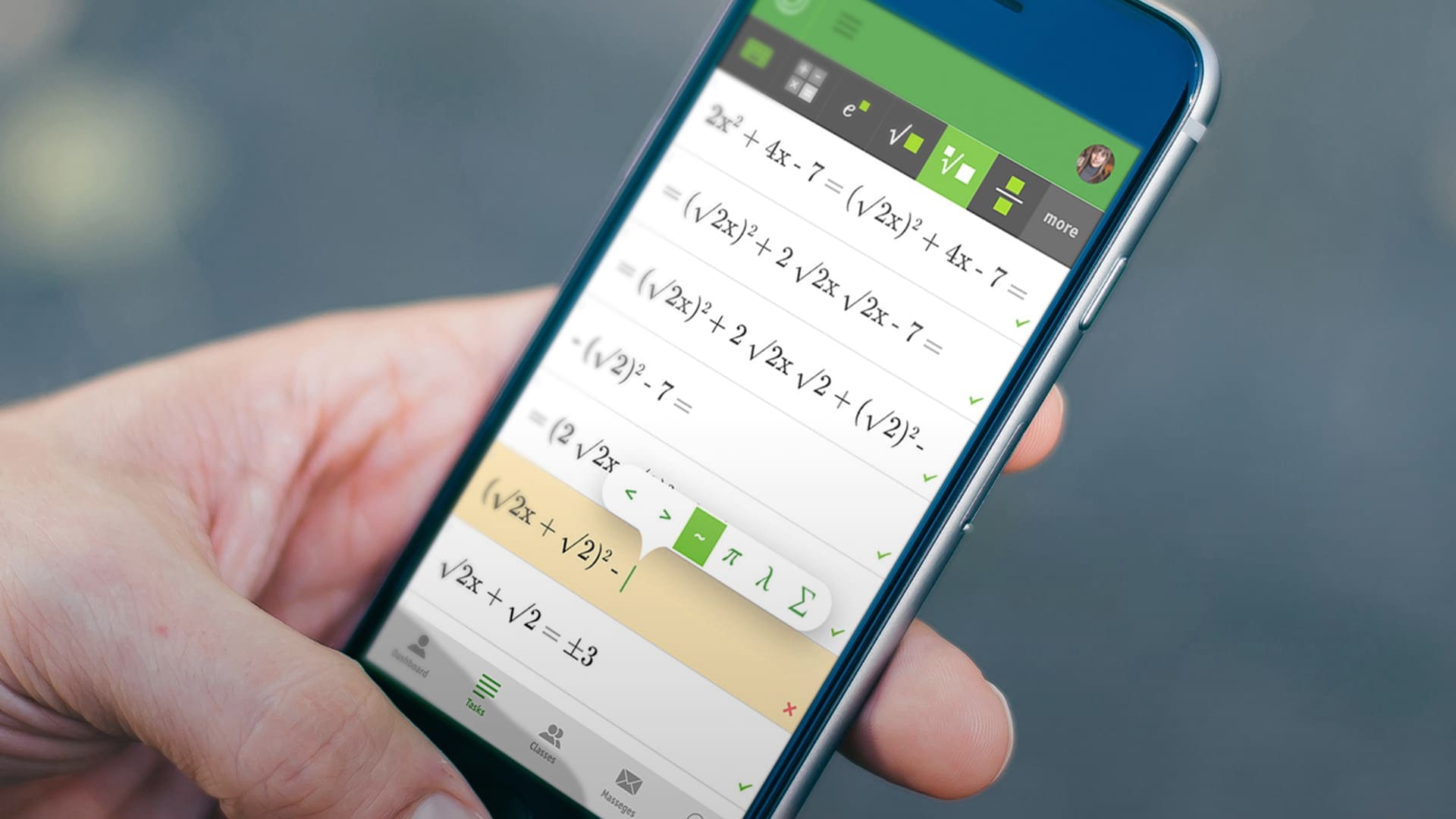
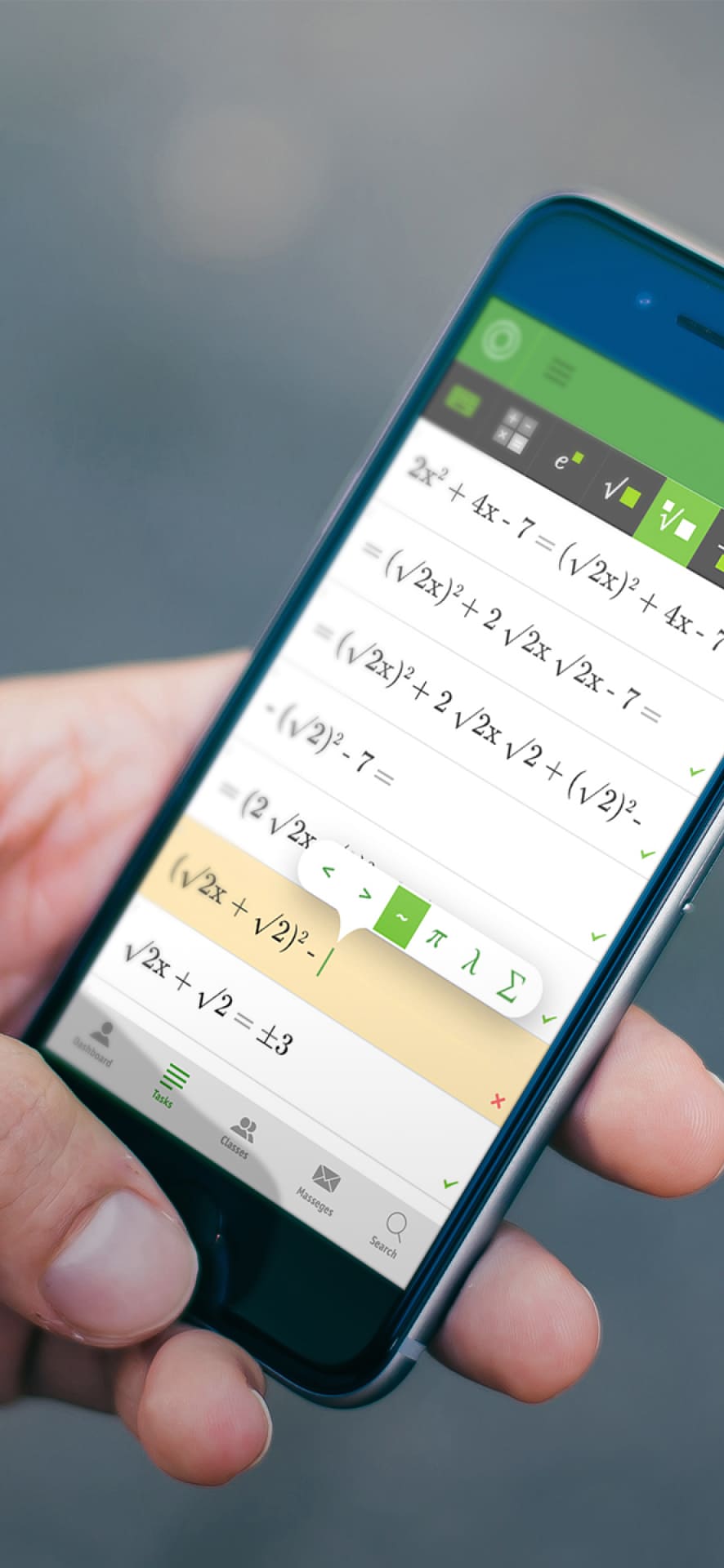
Mobile app. Solving tasks. Several different tools have been created, the set of which varies depending on the task level.
One of the first solutions among mobile applications for solving math problems
Developing a math verification and problem solving service for schools was a real challenge, due to the lack of any examples or ready-made libraries during the creation of the service, and much was created literally from scratch. Many unique solutions were created both in terms of backend and layout, which used a mathematical font and loading lines on the fly, without reloading the screen.
The solution of mathematical problems was implemented line by line to simplify the user experience and automatically verify solutions, with a simple and intuitive interface, including for inexperienced users, since the service was aimed at older teachers who had little experience interacting with digital products.
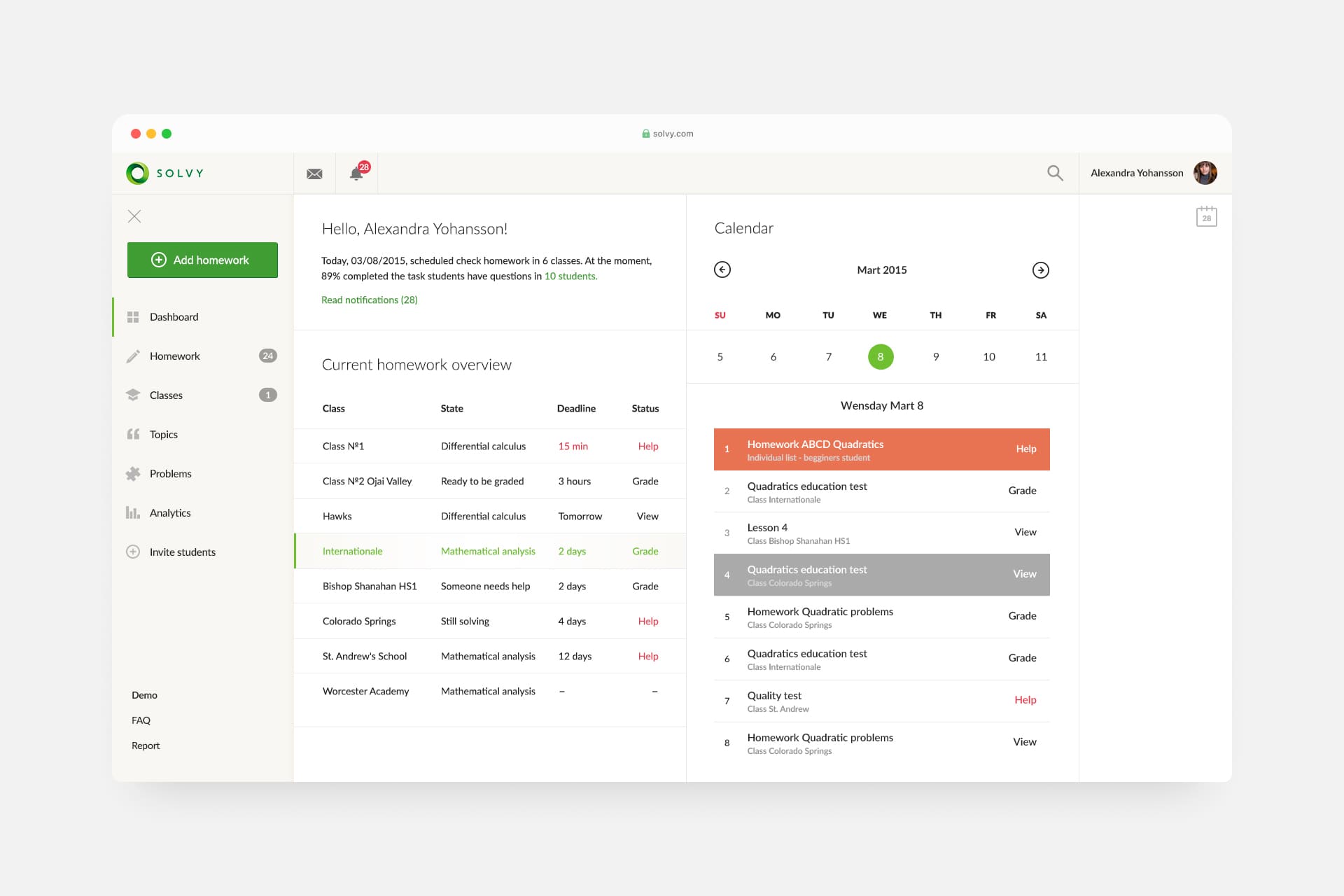
The teacher’s dashboard. A list of classes and a daily schedule with statuses for assignments from students
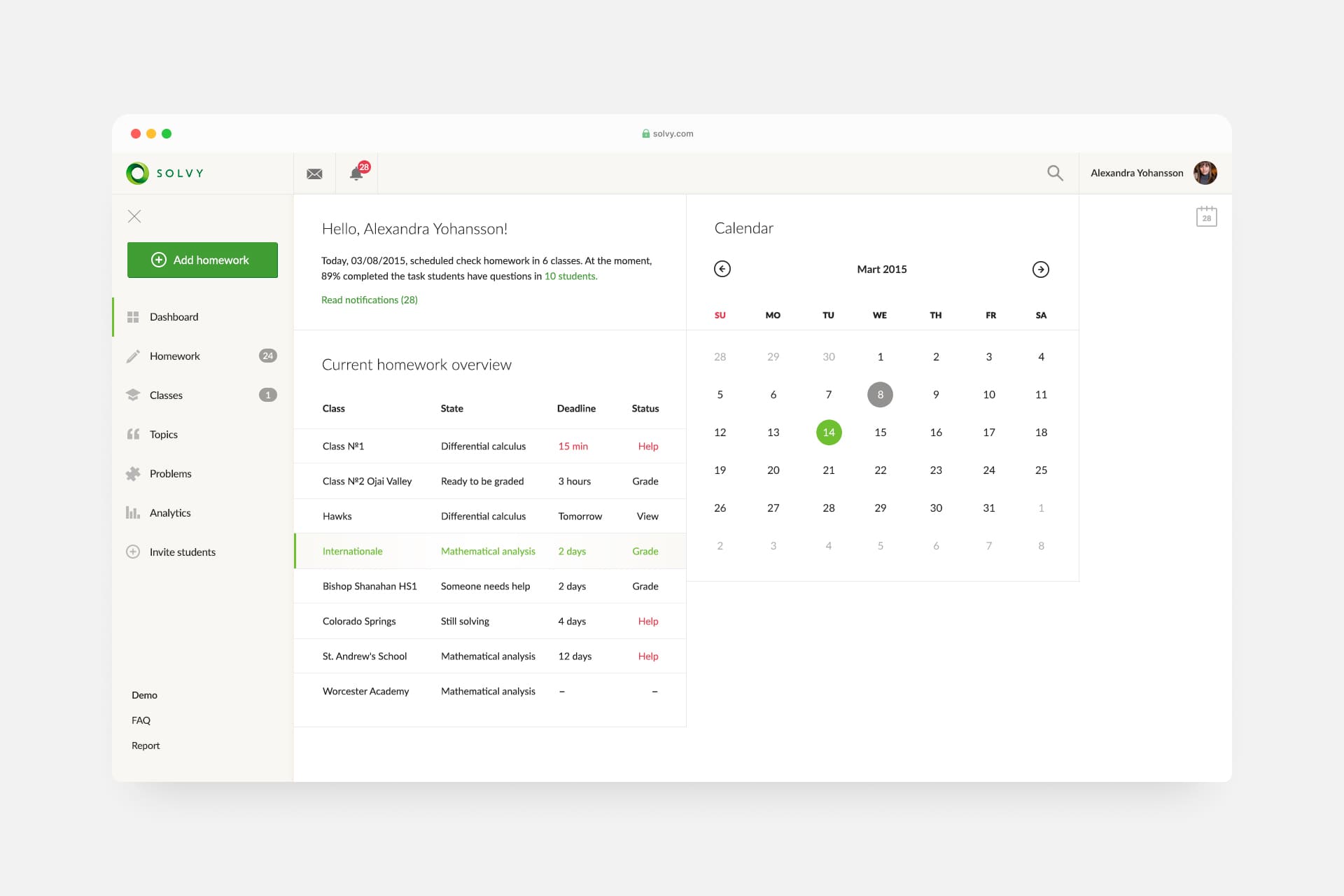
The teacher's general schedule
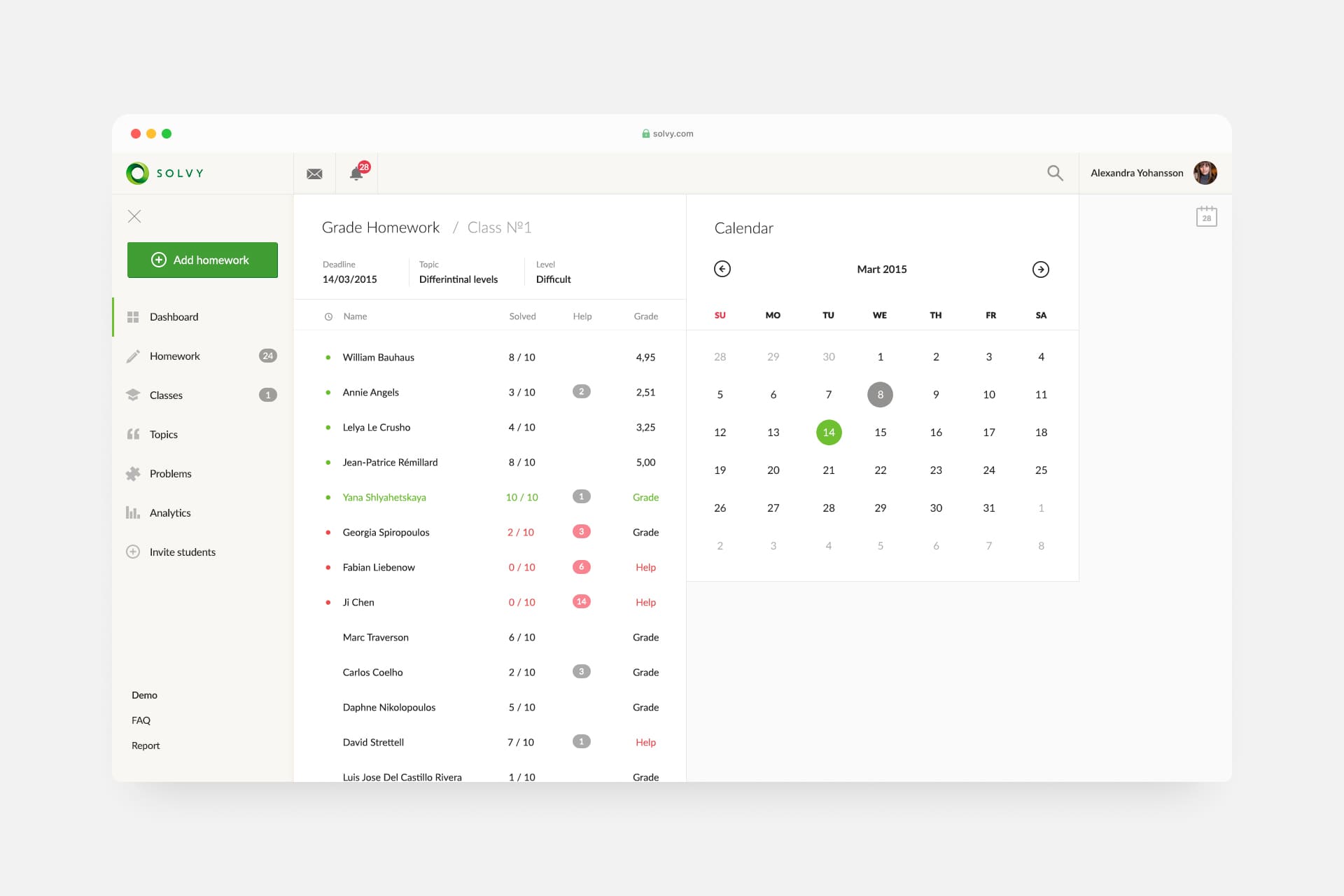
A list of class students and their progress on the current assignment and date
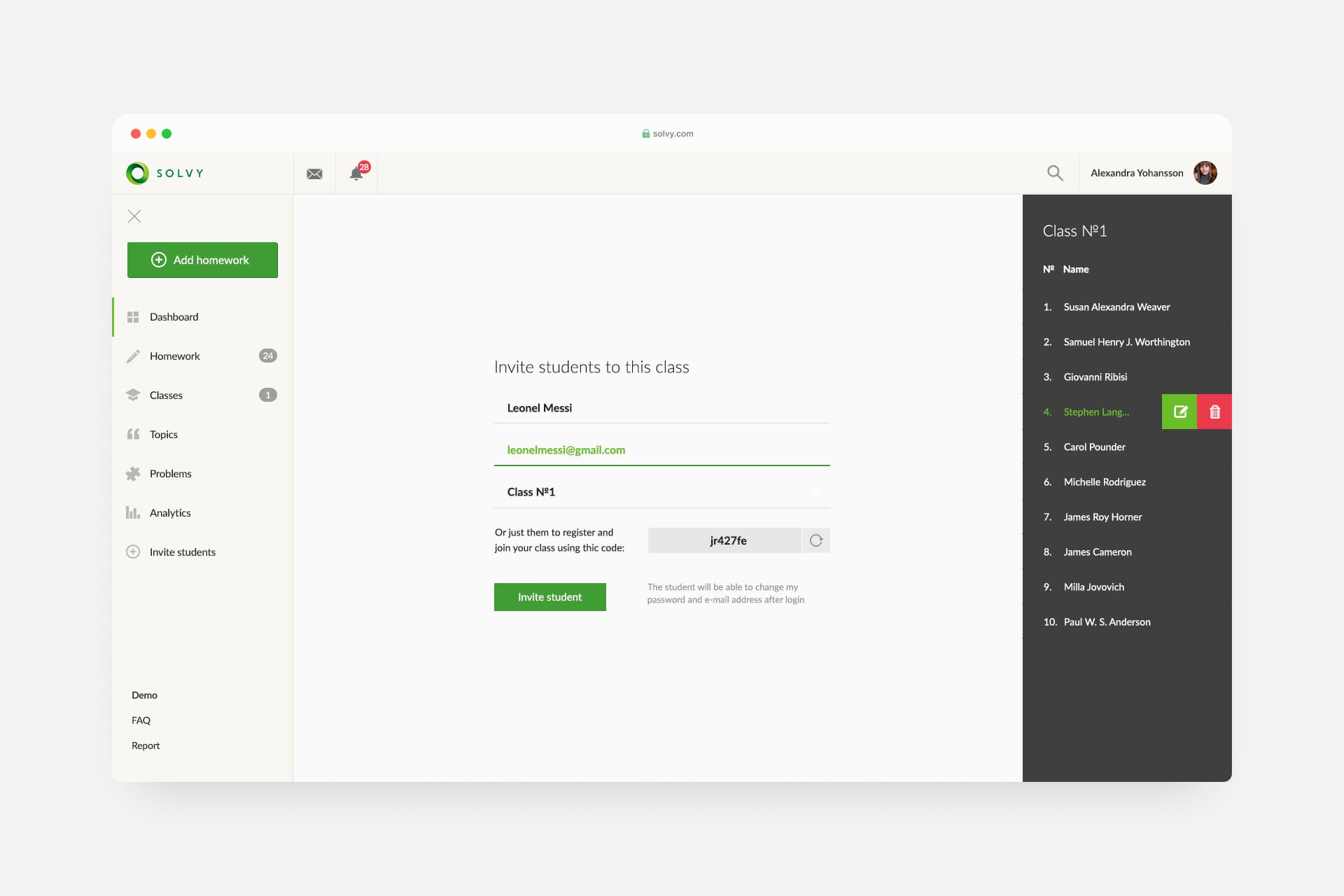
Adding a new student to a class
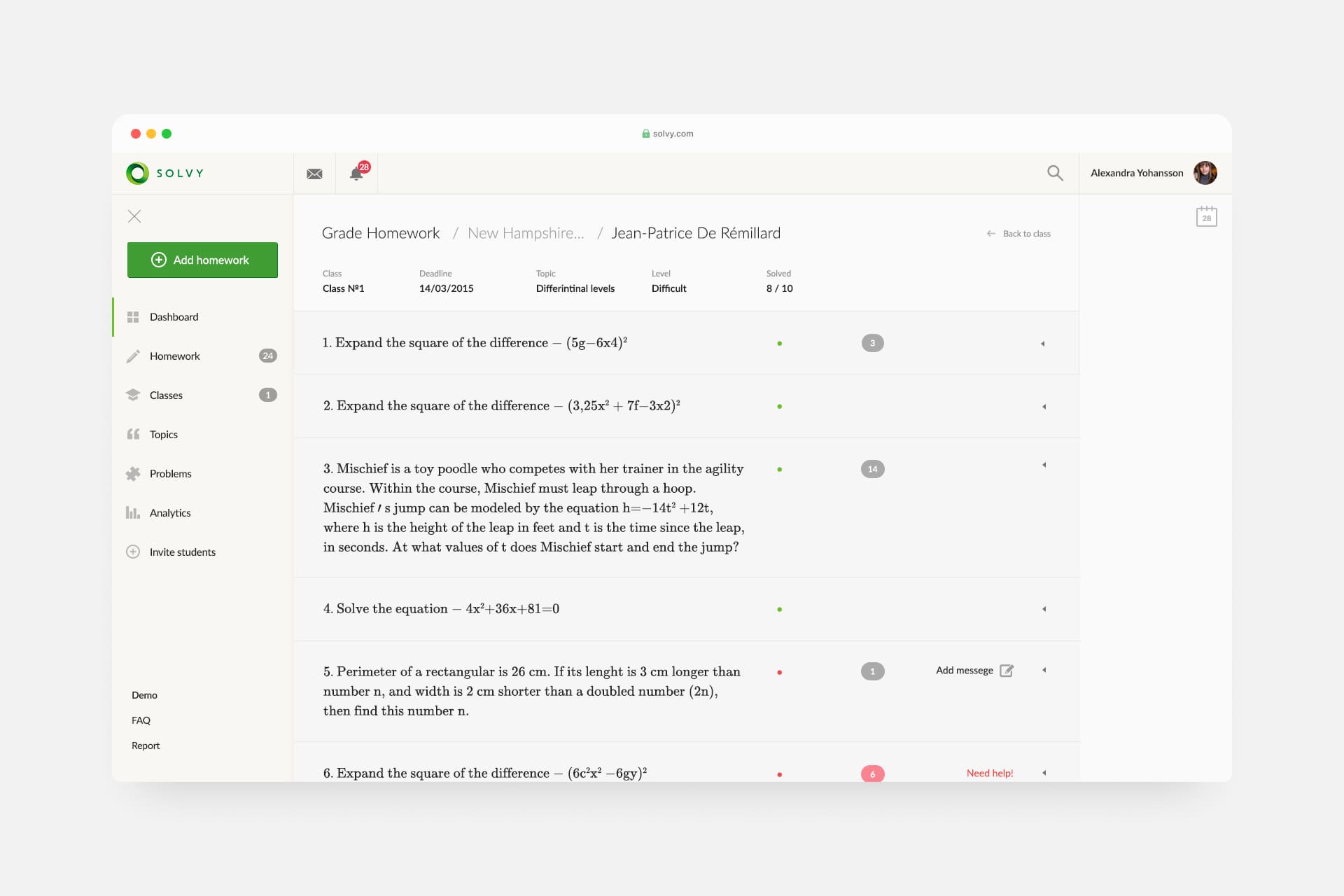
The list of tasks for the selected student
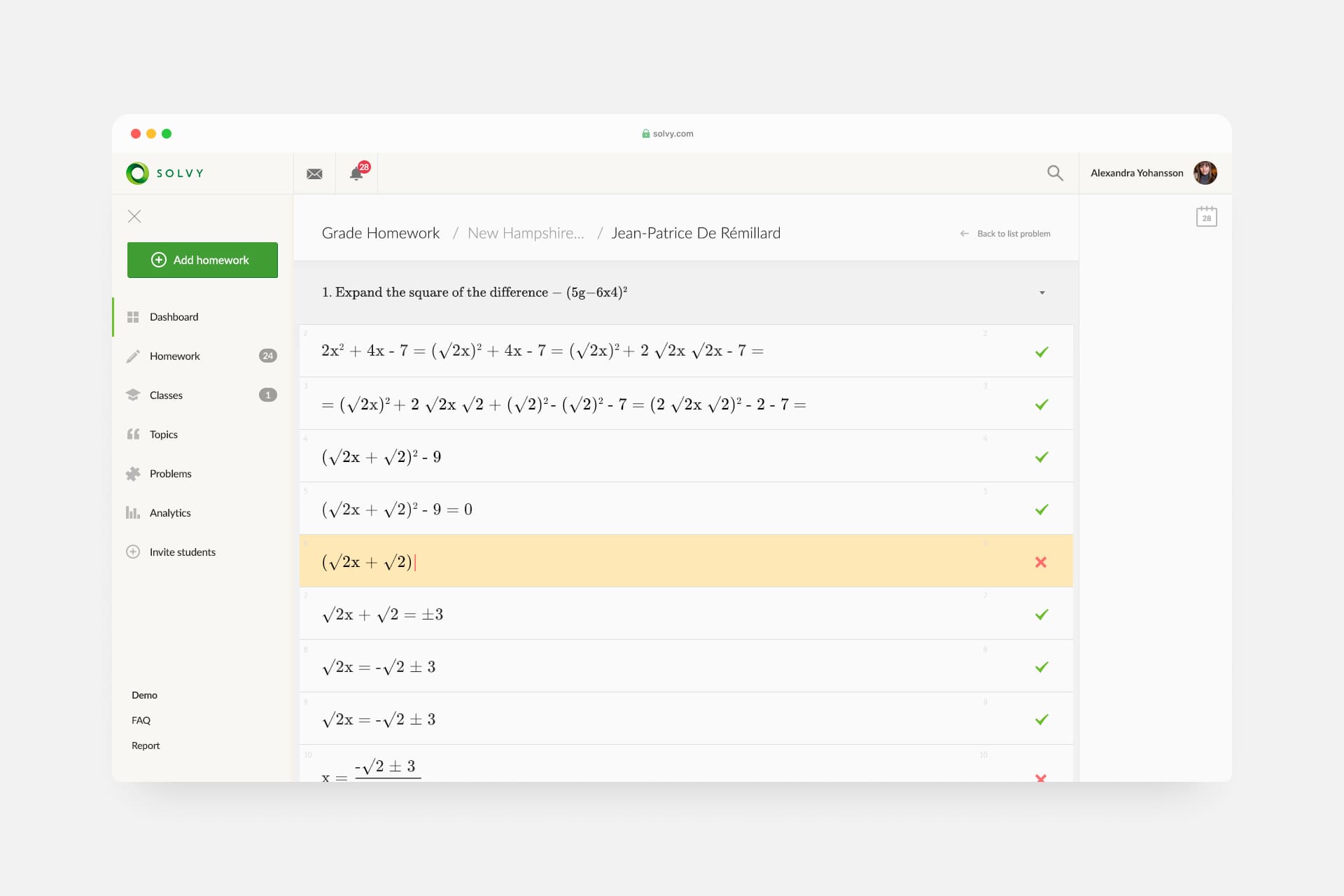
Parsing the selected student’s assignment along the highlighted lines, where the student made a mistake or could not solve it.
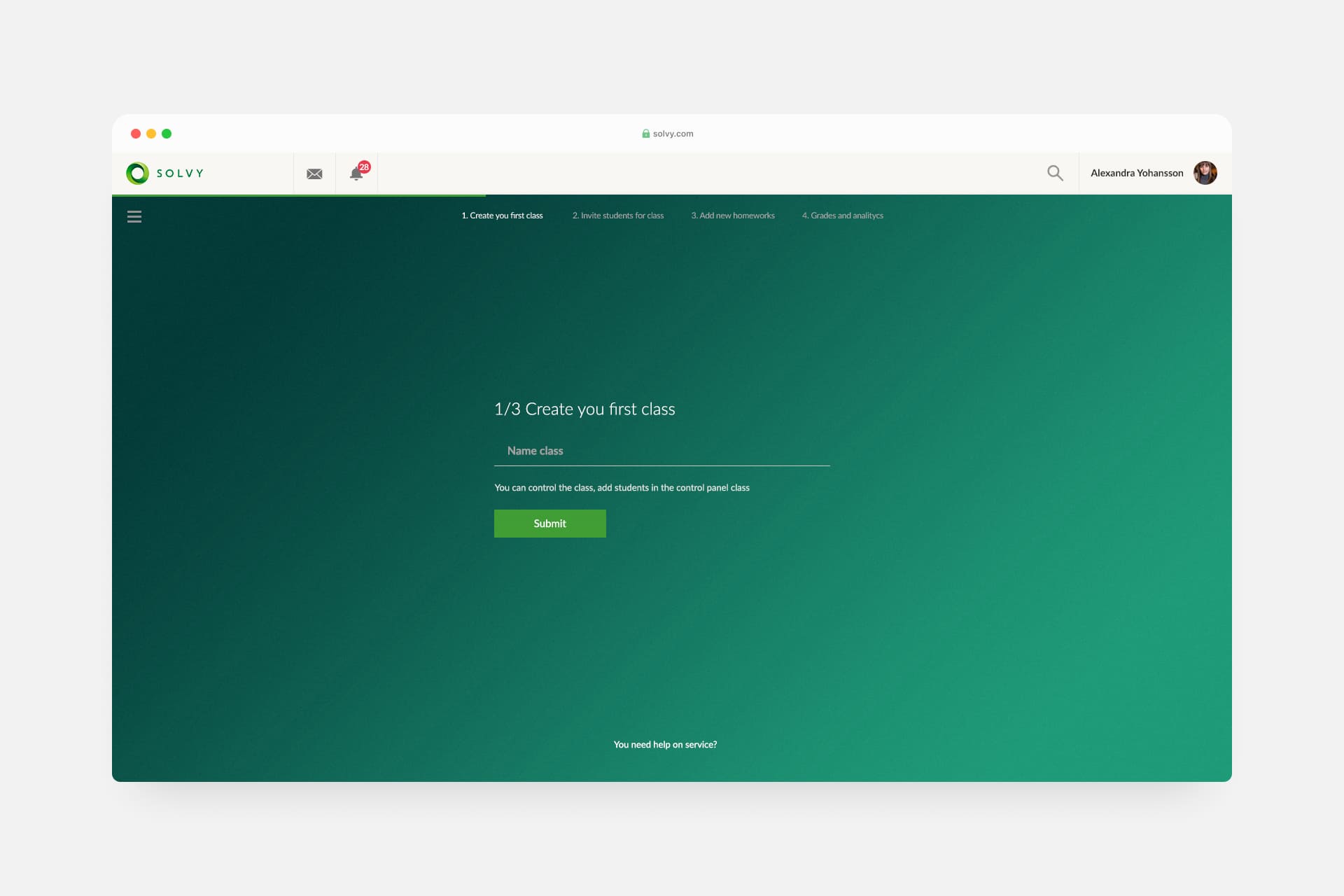
Creating a new class
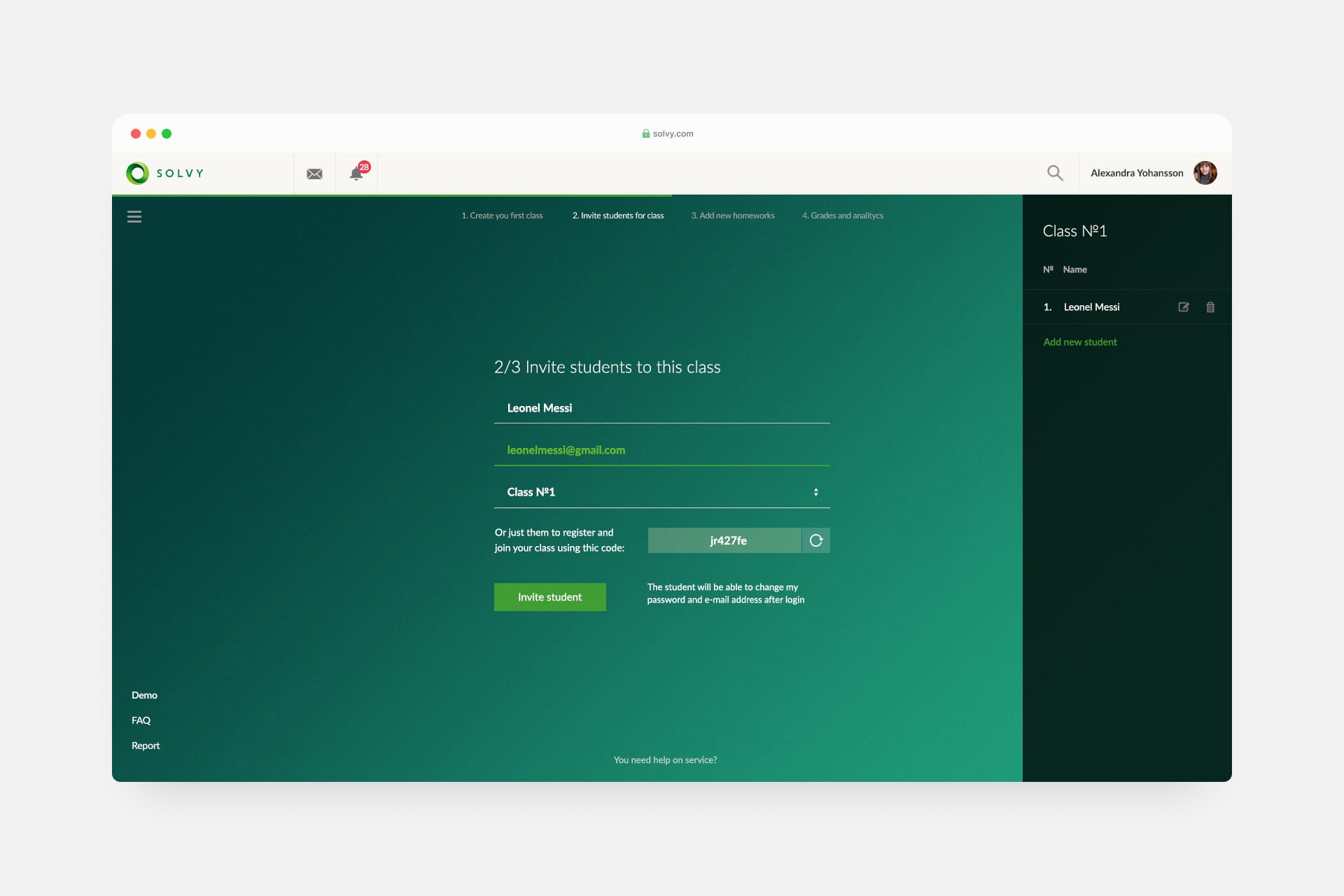
Adding students. Granting personal access
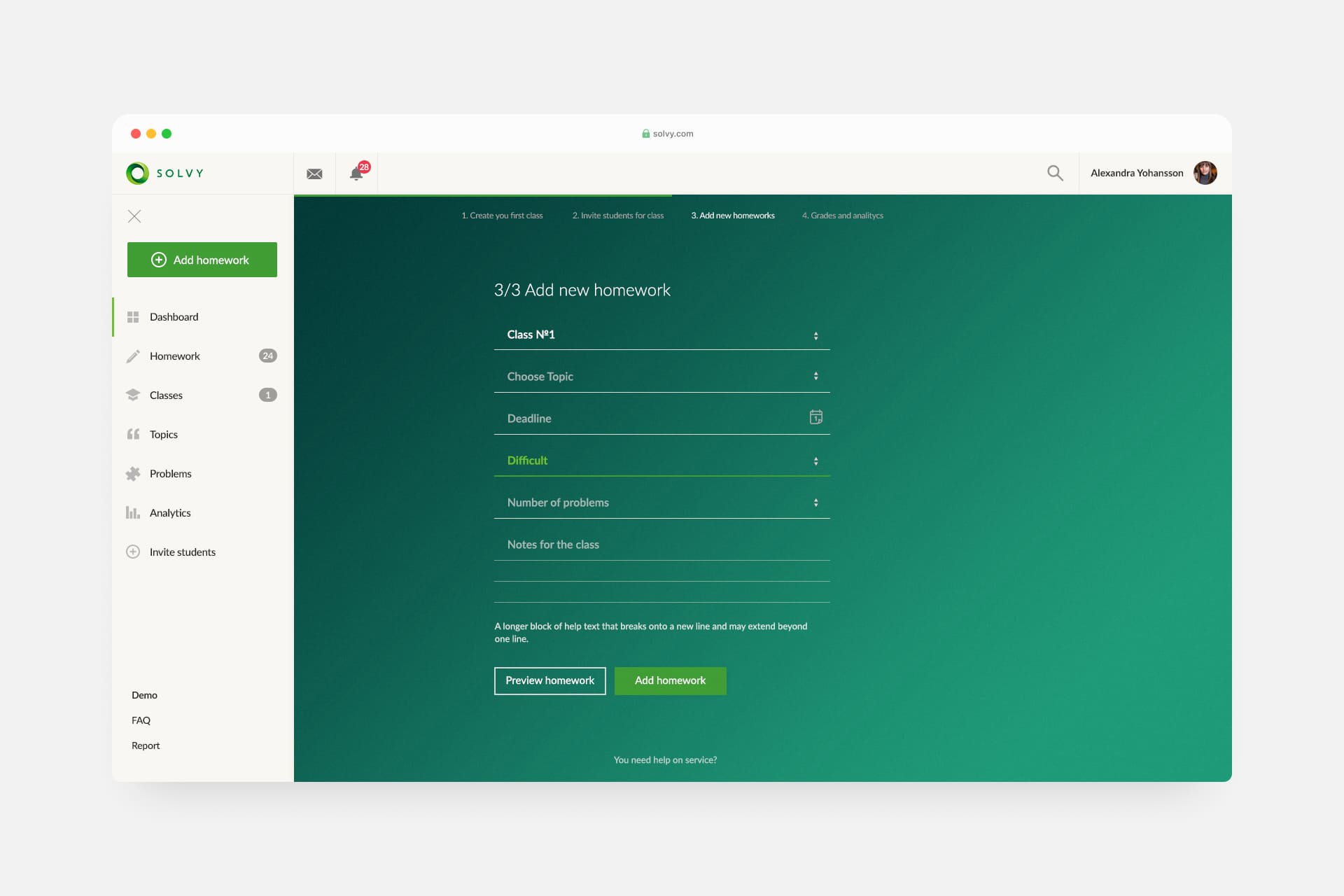
Setting up a class and issuing the first task
Managing class composition in classes that have already been created
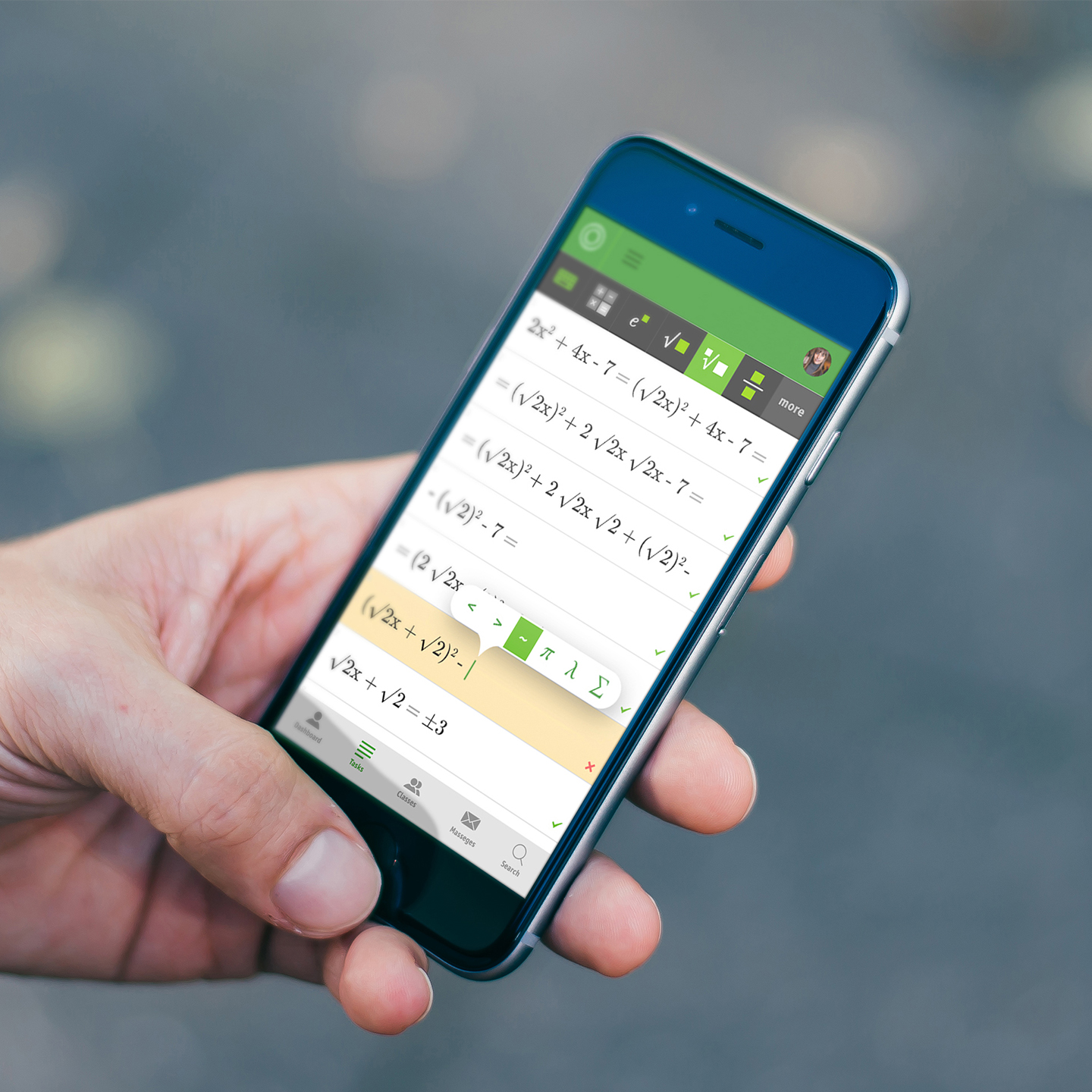
Mobile app
Among the features and main difficulties in design development, the task was to pack the basic tools for solving basic tasks into an extremely limited space of the mobile interface. This gave rise to an adaptive selection menu, where the necessary tools were displayed depending on the context of the task, which required the development of flexible algorithms, as well as conducting in-depth qualitative research together with teachers.
The project has received a lot of positive feedback from users and has received good ratings on TechCrunch.
An MVP of the product was created, which was successfully tested in several secondary schools in California, USA for several months, conducting both one-time sessions and in preparation for exams.